Sourcing cosplay armour and props without getting burned
A prop or armour piece is the easiest thing to buy badly: it photographs well, arrives wrong, and the deposit is gone. Here is what to inspect before you release the balance.
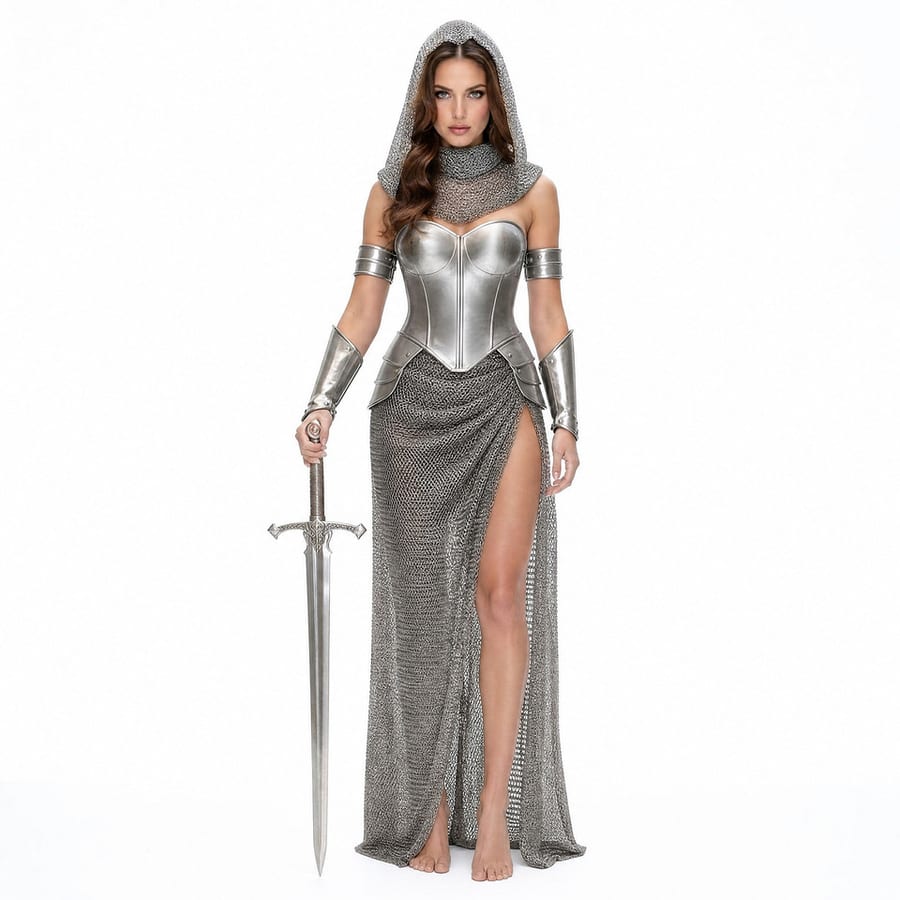
Props and armour are where cosplay sourcing goes wrong most often, for one structural reason: they are the pieces most likely to be made by a single person on a small order, and small orders have the least process behind them.
The failure is never in the photo
A sample photo shows a finished piece under studio light. What arrives may differ in four ways that the photo cannot show:
- Scale. A prop photographed alone has no size reference. Percentages matter enormously on a weapon or a pauldron.
- Weight. Resin armour that looks heroic in a photo can be unwearable over a two-day convention.
- Paint tone. Colour drifts between a sample and a production batch, and different photo lighting hides it.
- Edges and finish. Sharp seams, uneven weathering and rough internal surfaces.
Materials, and what they mean for the buyer
- EVA foam. Light, cheap, forgiving, and the standard for wearable armour. Bends out of shape with heat and does not hold fine detail well.
- Resin cast. Best detail, heaviest, brittle under impact, and needs a proper mould. Suits display pieces and rigid props more than wearable armour.
- 3D printed. Good detail, holds shape, seams and layer lines must be finished by hand — the finishing is where cost lives.
- Thermoformed plastic. Light and tough with a clean surface. Needs a formed buck, so it suits runs rather than one-offs.
The sample inspection checklist
Before releasing a balance on any prop or armour order:
- Measure it against the agreed dimensions, at the widest and longest points.
- Weigh it. If weight was not agreed, agree it now and put it in the spec.
- Photograph it in daylight and compare against the approved colour reference, not the original mood photo.
- Put it on. Straps, buckles and padding are where wearability is decided.
- Bend the edges on anything that will be worn. Cracking at the rim shows up in the first week of use.
- Check the inside. Finished inside surfaces are a decent proxy for general process quality.
Sample approval is not a formality. Approve the sample in writing with the photographs attached — that set of images becomes the definition of the order.
Questions before the deposit
- Is the sample the same process as the production run, or a hand-finished one-off?
- What is the tolerance on dimensions and on colour?
- If the production batch differs from the approved sample, what happens?
- Who pays return freight on a failed batch?
- Can you supply a spare of the parts most likely to break?
Red flags
- A reference render offered as a sample photo.
- No answer on tolerance, only reassurance.
- A price far below everyone else's for a fully finished piece — finishing is labour, and labour is not free.
- Reluctance to put any of the above in writing.
None of these are proof of bad faith. Together they are a reason to walk.
Written from recurring community discussion themes — r/CosplayHelp — "Cosplay Commission?" · r/CosplayHelp — "Anyone who makes rubber masks?". Topic cues only; every word here is original.
Need pricing for these styles?
Send quantities, sizes and your destination market — we reply with price, lead time and sample options.