From Conflicting Measurements to a Sellable Cosplay Size Spec
When a buyer's waist, height and chest land in different rows, the answer is not to guess a letter size. This practical guide helps importers, retailers and event producers turn real fitting questions into a clearer costume specification for wholesale or OEM enquiries.
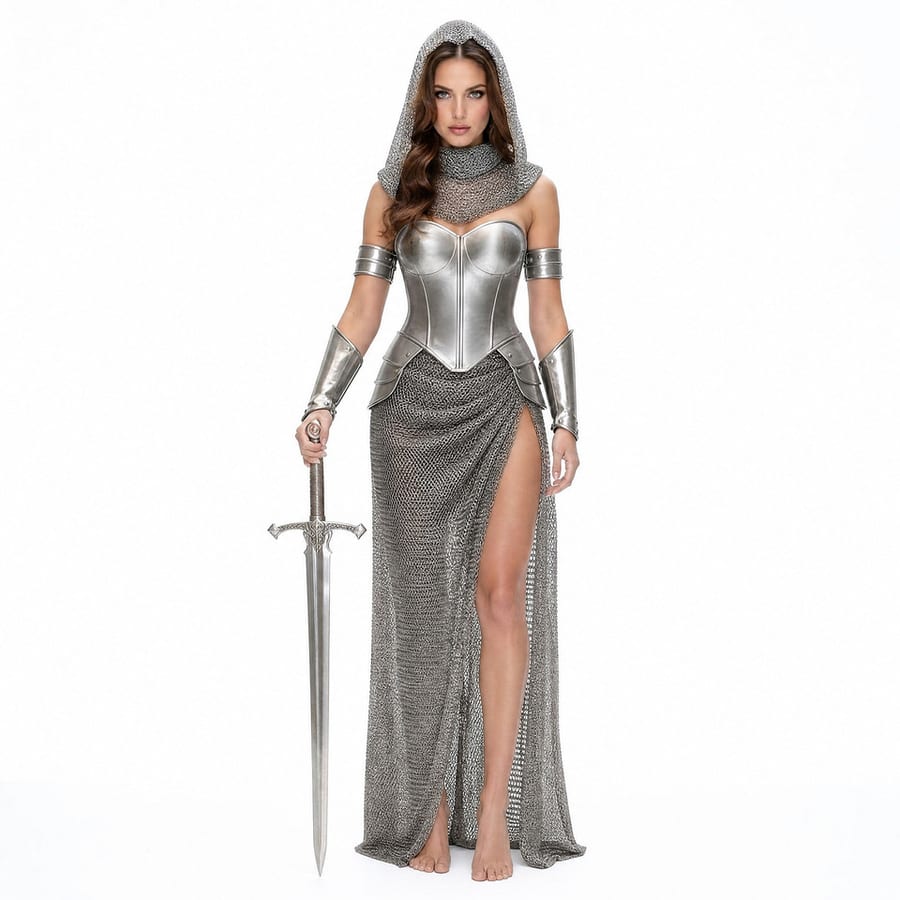
A size chart is only useful when it helps a buyer make a decision. In cosplay, that decision is often harder than choosing a colour: a customer's height, chest and waist may fall across different rows, while an event producer may need performers to move, change quickly and wear the same look under stage lights.
This is a buying and specification guide for party-goods importers, cosplay retailers, event and stage producers, and online sellers. It does not replace a confirmed size chart for a specific garment. It shows how to turn a vague "small or medium?" question into an enquiry a supplier can review properly.
Why a letter size is not enough
A letter on a listing is a label, not a measurement. The garment may be shaped around the chest, waist, hip, shoulder, inseam or another controlling point. The right choice depends on the construction and the amount of ease designed into that style.
For a buyer's brief, record the actual measurements rather than only the customer's usual size:
- Height and the measurement date.
- Chest or bust, waist and hip where the garment requires them.
- Shoulder width, sleeve length or inseam when the design depends on movement.
- The intended base layer, such as a shirt, underskirt or protective costume layer.
- Whether the wearer needs to sit, walk, dance, perform or complete a quick change.
A retailer can use this information to improve product-page guidance. An importer can use it to compare samples against one approved chart. An event producer can identify whether a standard graded run is realistic or whether a custom measurement process is needed.
What to do when measurements cross rows
Do not solve a cross-row measurement by automatically choosing the smallest or largest letter. First identify which measurement controls the garment.
A close-fitting bodice may need to respect the chest or bust. Trousers may be controlled by the waist, hip or rise. A cloak or cape may be more dependent on length and shoulder placement than on the waist. Armour-style outerwear may need room for a base layer and enough clearance for movement.
The supplier should be given the measurement set, the garment type and the fit preference. The response should explain which dimension is controlling, what can be adjusted, and what must be checked on a sample. If the style is not suitable for grading across the requested range, that limitation should be stated before bulk production is discussed.
Build the specification around use, not only appearance
A costume that looks correct in a product photograph may still fail during an event. Add use conditions to the technical brief:
- How long the wearer is expected to keep it on.
- Whether the wearer will walk, sit, dance, present or perform.
- Whether the garment is worn indoors, outdoors or across changing temperatures.
- Whether closures must support quick changes or repeated opening.
- Whether accessories, wigs, masks or outer layers affect the fit.
- Which areas must remain clear for visibility, breathing and safe movement.
For a stage producer, these notes help separate a display costume from a performance-ready brief. For an online seller, they become useful customer guidance without promising that one standard size fits every wearer.
Ask for a measurable sample review
A sample approval should compare the actual garment with the agreed specification, not just ask whether the sample looks attractive. Keep a simple review record covering:
- Finished measurements at the agreed points.
- Fabric, lining, padding and fastening details.
- Fit over the intended base layer.
- Movement in the poses relevant to the customer or performance.
- Placement of trims, armour panels, pockets and closures.
- Packaging and size identification required for resale.
Photographs can support the record, but they do not replace measurements. If a size issue is visible only when the wearer sits, raises an arm or walks, include that test in the approval notes. Keep the approved chart and sample comments together so a later reorder has a clear reference.
Turn sizing questions into a stronger wholesale enquiry
A useful first message does not need to contain a final answer. It needs enough context for the supplier to identify the next decision. Include:
- The product category and reference image or artwork.
- Your destination market and sales channel.
- The target wearer measurements or the size range you intend to sell.
- The fit purpose: retail, party use, stage performance, event uniform or online catalogue.
- Material, colour, finish, closure and packaging requirements.
- Whether you are evaluating an existing style, OEM development, ODM adaptation or a mixed range.
- The date by which you need to review samples, without assuming a production lead time.
Hongbo Cosplay's catalogue includes finished costumes, armor and outerwear, masks and headwear, wigs, and props. You can compare the costumes range, armor and outerwear, wigs, and masks and headwear while preparing a brief. For a new range, the custom and OEM service provides a starting point for discussing measurements, materials and product direction.
The conversion step: ask for review, not a generic catalogue
The most useful wholesale enquiry is specific about the problem. Tell us which measurements conflict, which garment or range you are planning, how the product will be used, and what information you already have. Hongbo Cosplay can then review whether the request is better handled through an existing product, a sample adjustment, a graded size plan or a broader OEM / ODM discussion.
Do not publish or promise a price, MOQ, certification, customer result or delivery date until it has been confirmed for the exact product, specification and market. Send the measurement set and reference material through the inquiry page; commercial terms and timing should be confirmed against the final approved brief.
Written from recurring community discussion themes — Reddit r/CosplayHelp — Brand New Day Peter Parker proCosplay Costume sizing help? (Oct 26, 2026): measurements falling across different size rows · Reddit r/CosplayHelp — Homemade wig help (Oct 23, 2026): a completed wig slipping back during wear · Hongbo Cosplay product catalogue — costumes, armor and outerwear, wigs, masks and headwear (site-local basis). Topic cues only; every word here is original.
Need pricing for these styles?
Send quantities, sizes and your destination market — we reply with price, lead time and sample options.